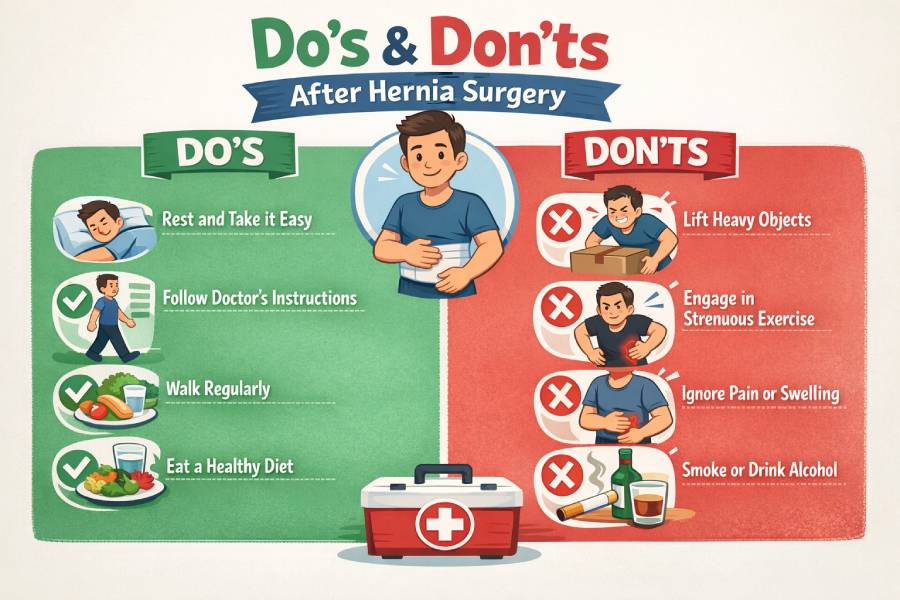
Recovering after hernia surgery requires proper care, correct habits, and avoiding activities that may strain the operated area. Following these do’s and don’ts will help you heal faster, reduce complications, and feel more comfortable.
✅ Do’s After Hernia Surgery:
Walk Regularly: Walking improves blood flow, reduces bloating, prevents constipation, and speeds up healing. Start with short walks 2–3 times a day.
Take Medicines on Time: Painkillers, antibiotics, and prescribed medicines must be taken at the correct time to control pain and prevent infection.
Eat a Soft, Healthy Diet: Include liquids, soft foods, fruits, vegetables, and protein-rich meals as advised. This prevents constipation and supports tissue healing.
Keep the Surgical Area Clean & Dry: Follow your surgeon’s dressing instructions. Report any redness, swelling, or discharge immediately.
Follow Lifting Restrictions: Only lift very light items initially (1–2 kg). Your surgeon will tell you when it is safe to lift heavier weights.
Use Proper Support: Wear an abdominal binder (if advised) to support the surgical site and reduce discomfort.
Follow Up Regularly: Attend scheduled follow-up visits for wound check and recovery assessment. Never skip appointments.
❌ Don’ts After Hernia Surgery:
Don’t Lift Heavy Weights: Avoid lifting anything above 4–5 kg for at least 4–6 weeks. This is the most important rule to prevent recurrence.
Don’t Strain While Passing Stools: Constipation can put pressure on the repaired area. Use fibre-rich foods, plenty of water, and stool softeners if prescribed.
Don’t Drive for a Few Days: Driving is not recommended for 5–7 days or until pain reduces, as sudden movements may cause strain.
Don’t Bend Suddenly or Twist the Body: Sudden movements may stress the stitches and cause pain.
Don’t Eat Gas-Producing or Heavy Foods: Avoid carbonated drinks, fried foods, cabbage, beans, and spicy dishes, especially in the first 2–3 weeks.
Don’t Remove Dressings on Your Own: Always follow what the doctor advises regarding wound care and bathing.
Don’t Ignore Warning Signs: Contact your surgeon immediately if you notice: