
Are you experiencing persistent chest pain, difficulty breathing, or severe acid reflux? These could be signs of a diaphragmatic hernia. While the condition sounds complex, modern medical advancements have made treatment safer and more effective than ever.
For world-class care, Dr. Pinak Dasgupta, a leading Hernia Specialist in Chennai, India provides advanced robotic and laparoscopic solutions to help you regain your quality of life. At GEM Hospital Chennai, we combine decades of expertise with cutting-edge technology to offer the best Diaphragmatic Hernia Treatment in Chennai, India.
What is a Diaphragmatic Hernia?
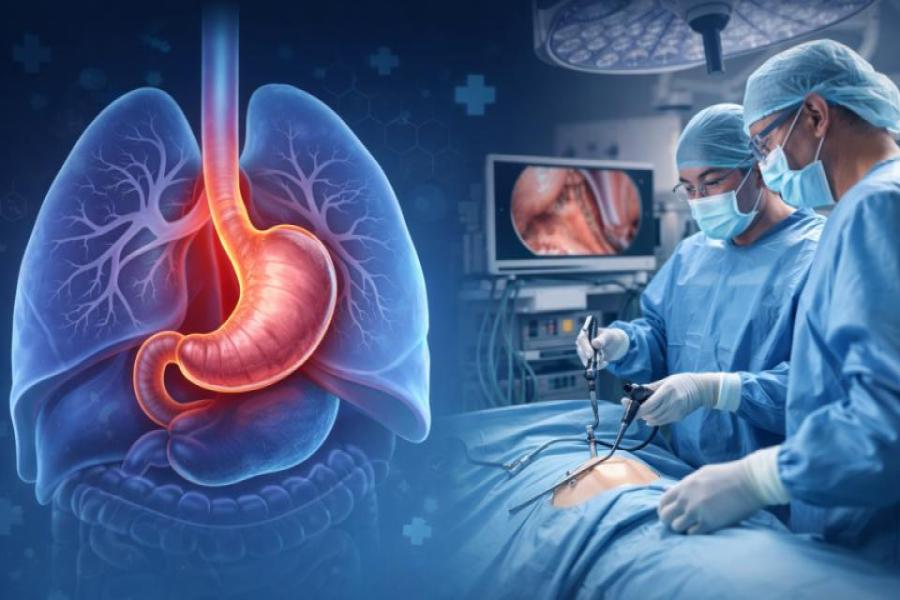
The diaphragm is a large, dome-shaped muscle that separates your chest cavity (containing the heart and lungs) from your abdominal cavity (containing the stomach and intestines). It plays a vital role in breathing.
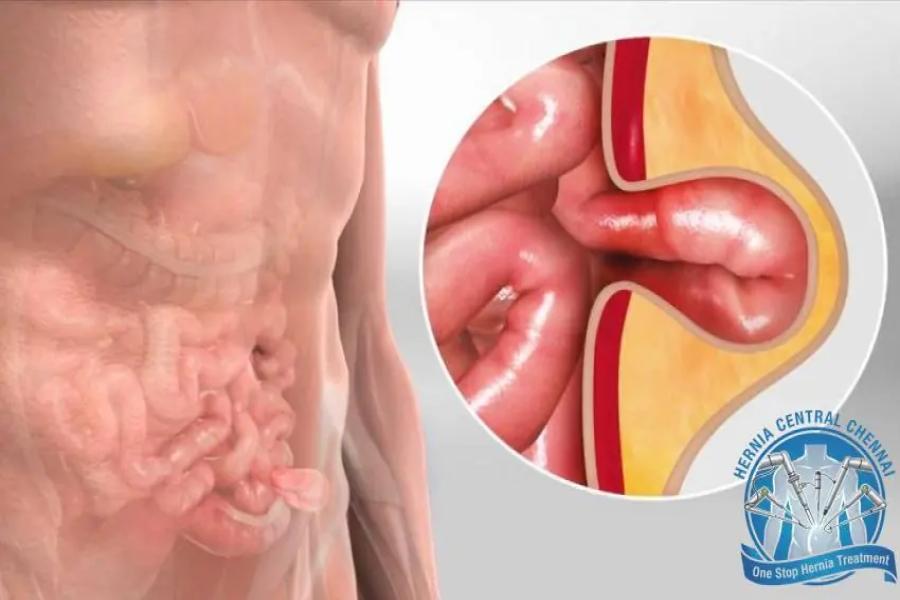
A diaphragmatic hernia occurs when there is an abnormal opening or weakness in this muscle. This opening allows abdominal organs—such as the stomach, spleen, or intestines—to push upward into the chest cavity. This displacement can compress the lungs and heart, leading to serious respiratory and digestive issues.
Common types include:
- Hiatal Hernia: When the upper part of the stomach pushes through the esophageal opening.
- Traumatic Hernia: Caused by an injury or accident.
- Congenital Hernia: Present from birth due to improper diaphragm development.
Symptoms of Diaphragmatic Hernia:
Symptoms can vary depending on the size of the hernia and which organs have moved into the chest. Some patients may remain asymptomatic, while others experience:
- Shortness of breath: Difficulty breathing because the lungs cannot expand fully.
- Severe Heartburn or GERD: Acid reflux that does not respond well to medication.
- Chest or Abdominal Pain: Often felt after eating.
- Difficulty Swallowing: A feeling of food getting stuck in the chest.
- Rapid Heart Rate: Caused by pressure on the heart.
- Bowel Sounds in the Chest: A distinct sign where digestion noises are heard in the chest area.
Diagnosis of Diaphragmatic Hernia:
Early diagnosis is key to preventing complications. If you visit a Hernia Specialist in India like Dr. Pinak Dasgupta, he will use a combination of physical exams and advanced imaging:
X-rays:
To see if abdominal organs are present in the chest cavity.
CT Scan:
Provides a detailed 3D view of the diaphragm and the extent of the hernia.
Barium Swallow:
A specialized X-ray where you drink a liquid that highlights the digestive tract.
Endoscopy:
A thin tube with a camera is used to check the esophagus and stomach internally.
Diaphragmatic Hernia Treatment Options:
Treatment focuses on moving the organs back to the abdomen and repairing the hole in the diaphragm. Dr. Pinak Dasgupta specializes in Hernia Repair in India using the following methods:
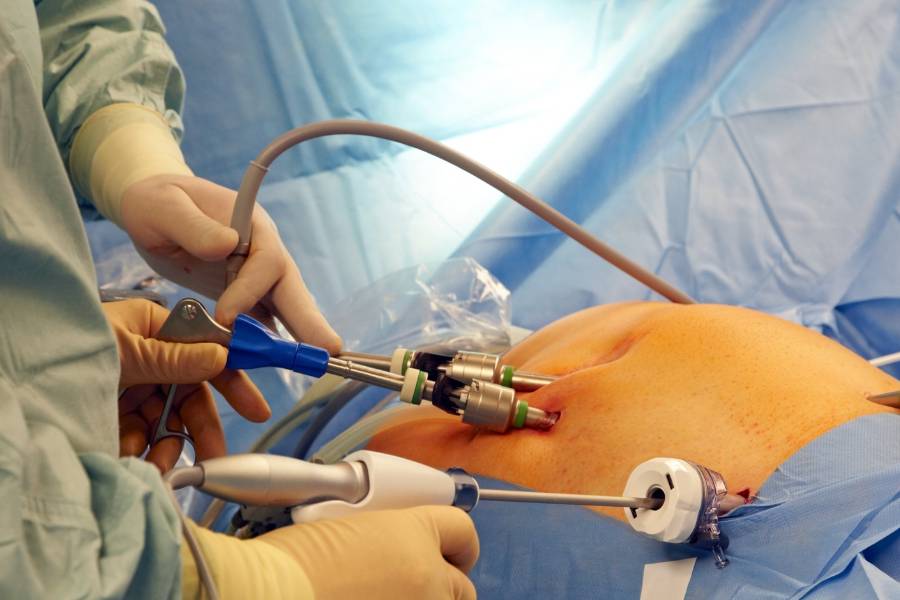
Laparoscopic Surgery (Minimally Invasive):
The surgeon makes small keyhole incisions. A camera and specialized tools are used to repair the diaphragm. This results in less pain and a faster return to daily activities.
Robotic-Assisted Surgery:
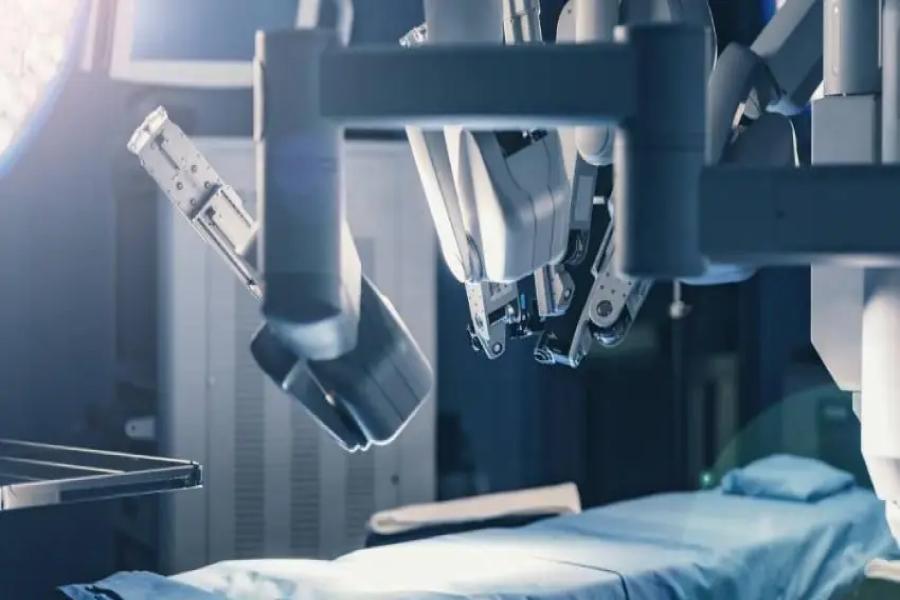
As a certified Intuitive DaVinci Robotic Surgeon, Dr. Dasgupta uses robotic precision to perform complex reconstructions. This is often the preferred method for large or complicated diaphragmatic hernias.
Open Surgery:
In rare, emergency cases (such as severe trauma), a traditional open incision may be required to quickly stabilize the patient and repair the muscle.
Benefits of Robotic Diaphragmatic Hernia Surgery:
Robotic technology has revolutionized Diaphragmatic Hernia Treatment in Chennai, India. Choosing robotic surgery offers several advantages:
- Enhanced Precision: The robotic system allows for 360-degree wrist movements that the human hand cannot achieve in tight spaces.
- 3D Visualisation: High-definition magnification allows the surgeon to see nerves and tissues clearly.
- Minimal Blood Loss: Smaller incisions and precise movements reduce the risk of bleeding.
- Faster Recovery: Most patients can return home within a couple of days and resume work much sooner than with open surgery.
- Lower Risk of Infection: Smaller wounds heal faster and are less prone to complications.
What Happens If Diaphragmatic Hernia Is Left Untreated?
- Expert in Complex & Chronic Post-Hernia Pain Management: He specialises in diagnosing the exact cause of persistent pain and providing personalised treatment.
- Advanced Laparoscopic & Robotic Techniques: Minimally invasive approaches ensure accurate correction and faster recovery with minimal discomfort.
- High Success Rate in Recurrent & Complex Hernia Cases: Patients across India trust his expertise for safe, precise, and long-lasting results.
- Comprehensive Care with Physiotherapy Support: Complete support—from diagnosis to rehabilitation—helps patients return to normal life quickly.
Many people try to live with the discomfort, but an untreated diaphragmatic hernia is a “ticking time bomb.” Possible complications include:
- Strangulation: The stomach or intestine can get twisted and trapped in the hole. This cuts off blood supply, which is a life-threatening emergency.
- Lung Compression: Over time, the pressure on the lungs can cause permanent breathing issues or repeated pneumonia.
- Gastric Volvulus: The stomach twists on itself, causing severe pain and preventing any food or liquid from passing.
- Internal Bleeding: Constant rubbing of the stomach against the diaphragm can cause ulcers and bleeding.
Post-Surgery Care and Recovery:
After your Hernia Repair in India, the recovery process is straightforward. Under the guidance of Dr. Pinak Dasgupta, you will follow a recovery plan:
- Diet: You will start with liquids, moving to soft foods like khichdi or curd rice for the first two weeks.
- Activity: Walking is encouraged from the very next day. However, you must avoid lifting heavy weights (more than 5kg) for at least 2 months.
- Follow-up: Regular check-ups ensure that the diaphragm is healing well and the mesh (if used) is in place.
Why Choose Dr. Pinak Dasgupta for Diaphragmatic Hernia Treatment in Chennai, India?
When it comes to your health, experience matters. Dr. Pinak Dasgupta is widely recognised as the premier Hernia Specialist in Chennai.
- Expertise: With over 21+ years of experience and 5,000+ successful hernia surgeries, he is a master of his craft.
- Robotic Pioneer: He has performed over 1,000 robotic procedures and was named “Best Robotic Surgeon from South India.”
- Ambidextrous Skill: His unique ability to operate with equal precision using both hands is a massive advantage in complex robotic reconstructions.
- Academic Excellence: A gold medalist and fellow of multiple international surgical bodies, he stays at the forefront of surgical innovation.
- Patient-Centric Care: Located at GEM Hospital, Chennai, he provides a compassionate environment focused on long-term recovery and minimal discomfort.
If you or your loved one is facing symptoms of diaphragmatic hernia, do not delay treatment. Early diagnosis and expert care can prevent serious complications and ensure faster recovery. Dr. Pinak Dasgupta provides advanced and personalised treatment plans for every patient. Call 8811091676 to book your consultation today and get expert care from a trusted Hernia Specialist in Chennai, India.
Frequently Asked Questions (FAQ's):
Small and symptom-free cases may be monitored. Most cases need surgery for permanent repair.
Most patients stay in the hospital for 2 to 3 days. You can usually return to light desk work within 2 weeks, but heavy lifting should be avoided for 6 to 8 weeks.
While rare, there is a small chance of recurrence. Dr. Pinak Dasgupta uses advanced mesh reinforcement and high-tension suturing techniques to minimize this risk.
Avoid spicy foods, oily items, caffeine, alcohol, carbonated drinks, and heavy meals as they can increase pressure and reflux.