
Open hernia repair is a time-tested, reliable, and highly effective surgical method for treating different types of hernias, including inguinal, femoral, umbilical, ventral, epigastric, and incisional hernias. Unlike laparoscopic surgery, open hernia repair involves a single, slightly larger incision directly over the hernia site. This allows the surgeon to access the defect easily and place a mesh securely to prevent recurrence. Dr. Pinak Dasgupta, a leading Hernia Specialist in Chennai and colorectal surgeon in Chennai, has over 21+ years of specialised experience in performing open and complex hernia repairs. He is known for managing challenging hernias such as strangulated hernias, very large abdominal wall defects, recurrent hernias, and cases unsuitable for laparoscopy. He practices at GEM Hospital, Chennai, a top centre in India for advanced hernia care. For patients who need a strong, long-lasting, and stable hernia repair, open surgery remains the gold-standard option.
What is Open Hernia Repair?
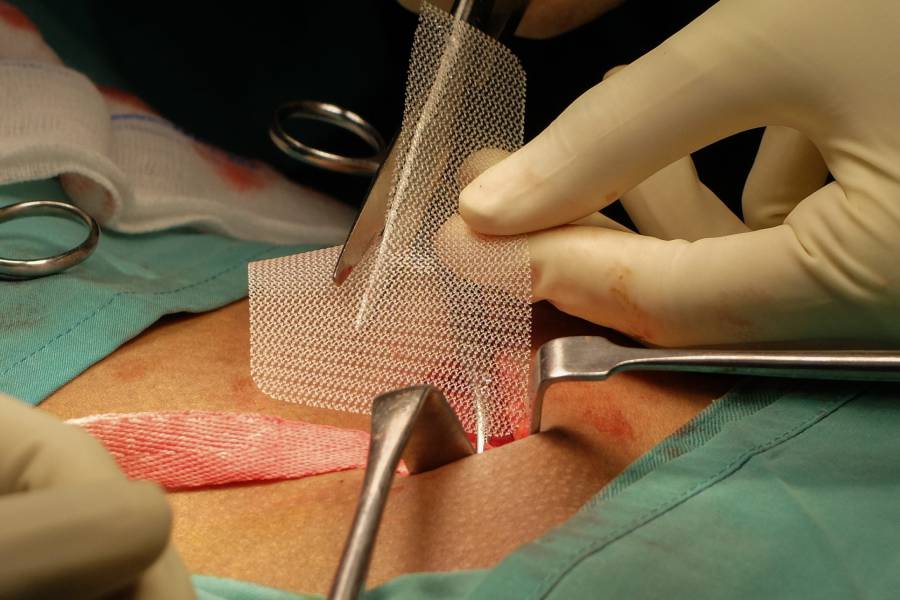
Open hernia repair is a surgical technique in which a single incision is made directly over the hernia site. The surgeon pushes the protruding tissues back into place and reinforces the weakened area of the abdominal wall using mesh.
It is most suitable for:
- Large, longstanding hernias
- Strangulated or obstructed hernias (emergency conditions)
- Patients unsuitable for laparoscopy
- Very complex abdominal wall hernias
Open hernia repair provides excellent strength, lower recurrence rates, and is the ideal option in situations where minimally invasive surgery is not appropriate.
Who Is the Right Candidate for Open Hernia Repair?
You may be an ideal candidate if:
- You have a large or complicated hernia
- You have a strangulated, obstructed, or emergency hernia
- You previously had abdominal surgery making laparoscopy risky
- You have medical conditions that do not permit general anaesthesia
- You want a strong, durable repair with mesh reinforcement
- You prefer a traditional approach with direct access to the hernia site
- You have a very large incisional or ventral hernia
A consultation, physical examination, and imaging studies (ultrasound or CT scan) help Dr. Pinak Dasupta decide the safest and most effective approach for your condition.
Benefits of Open Hernia Repair:
- Best for Very Large Hernias: Open surgery provides direct access, making it ideal for large, longstanding, or complicated hernias that cannot be repaired laparoscopically.
- Highly Reliable & Durable Repair: The mesh is placed with strong fixation, ensuring long-term success and stability with minimum recurrence risk.
- Safer for Emergency or Strangulated Hernias: If the hernia is stuck, painful, or involves compromised intestine, open repair is the safest approach.
- Better for Patients Not Fit for General Anaesthesia: Many open hernia repairs can be safely performed under spinal or local anaesthesia.
- Excellent Choice for Recurrent or Previously Operated Hernias: Especially when the prior surgery was laparoscopic, open repair gives a fresh anatomical approach.
Types of Open Hernia Repair Available:
- Open Mesh Repair (Lichtenstein Repair): One of the most widely performed procedures for inguinal hernias. The surgeon reinforces the weakened area with a flat mesh to prevent recurrence. It offers excellent long-term success with quick recovery and minimal complications.
- Shouldice Hernia Repair (Non-Mesh Technique): A specialised tissue-based repair done without mesh, often preferred for young patients, small hernias, or cases where mesh is not advisable. It provides strong anatomical reconstruction with minimal recurrence when done by an experienced surgeon.
- Open Ventral / Umbilical / Epigastric Hernia Repair: Used for abdominal wall hernias. The defect is exposed directly and repaired using mesh reinforcement. This method is best for large defects, recurrent hernias, or cases with thinning abdominal muscles.
- Open Incisional Hernia Repair: Performed for hernias that develop after previous surgery. The open method allows complete scar tissue release and strong reinforcement with mesh. This approach is ideal for large or complex incisional hernias.
- Open Femoral Hernia Repair: Femoral hernias are often small but dangerous due to the risk of strangulation. Open repair ensures safe closure of the defect with mesh and prevents life-threatening complications.
Indications for Open Hernia Surgery:
- Very large hernias
- Strangulated or obstructed hernias
- Infected or contaminated surgical fields
- Recurrent hernias after laparoscopic repair
- Hernias associated with abdominal wall weakness
- Patients unfit for general anaesthesia
- Complex or multi-site abdominal wall hernias
Cost of Open Hernia Repair in Chennai:
Cost depends on:
- Hernia type & size
- Whether the case is simple or complex
- Need for emergency surgery
- Mesh type
- Hospital stay duration
Open hernia surgery usually costs slightly less than laparoscopic surgery and offers excellent durability. A personalised estimate is provided after evaluation.
Why Choose Dr. Pinak Dasgupta for Open Hernia Repair in Chennai?
- Highly Experienced in Complex Open Hernia Surgeries: Dr. Pinak Dasgupta is well known for handling large, complicated, and recurrent hernias where open surgery is often the safest and most reliable option. His deep understanding of abdominal wall anatomy helps achieve strong and secure repairs.
- Over 21 Years of Dedicated Hernia Surgery Experience: With more than two decades of exclusive surgical practice, Dr. Pinak Dasgupta has successfully performed 5000+ hernia surgeries. He is skilled in both mesh and non-mesh open hernia repair techniques, choosing the best method based on each patient’s condition.
- Expert Care for Emergency Hernia Cases: Emergency hernias such as strangulated or obstructed hernias require immediate and experienced surgical care. Dr. Pinak Dasgupta timely decision-making and calm approach help prevent complications and improve patient recovery.
- Focus on Strong and Long-Lasting Repair: He uses high-quality meshes, advanced suturing methods, and precise reconstruction techniques to ensure durable results and reduce the chances of recurrence.
- Award-Winning Surgeon with National Recognition: Dr. Pinak Dasgupta has received several prestigious awards for his excellence in hernia and robotic surgery. His major honours include the Award for Excellence in Hernia Surgery (2021), the IAGES Shining Star Award (2022), and multiple Best Video Awards at national and international conferences such as CRSA 2020, ANZ AWR 2021, and HSICON 2021. His surgical work has also been recognised internationally, with video selections at KSELS (Korea) in 2021 and 2022. These awards reflect his strong commitment to safe surgery, advanced techniques, and excellent patient outcomes.
- Clear Communication and Honest Medical Advice: Patients receive complete guidance about their condition, treatment options, recovery, and expectations. Dr. Pinak Dasgupta believes in honest counselling so patients can make confident and informed decisions.
- Book an Appointment: To consult Dr. Pinak Dasgupta for open hernia surgery in Chennai, you can book an appointment by calling 8811091676 or visiting GEM Hospital, Perungudi, Chennai.
Frequently Asked Questions (FAQ's):
Pain is mild to moderate initially and easily controlled with medications. Most patients feel comfortable within a few days.
Both are excellent. The choice depends on hernia size, complexity, recurrence status, and patient fitness. Dr. Pinak recommends the safest option for each patient.
You can resume light activities in 7–10 days. Complete healing takes 4–6 weeks.
In 95% of cases, yes. Mesh strengthens the abdominal wall and prevents future recurrence.
Walking can begin immediately. Heavy lifting and gym exercises can resume after 6–8 weeks.
Yes. Open repair is often the preferred approach for recurrent cases after previous laparoscopic repair.