
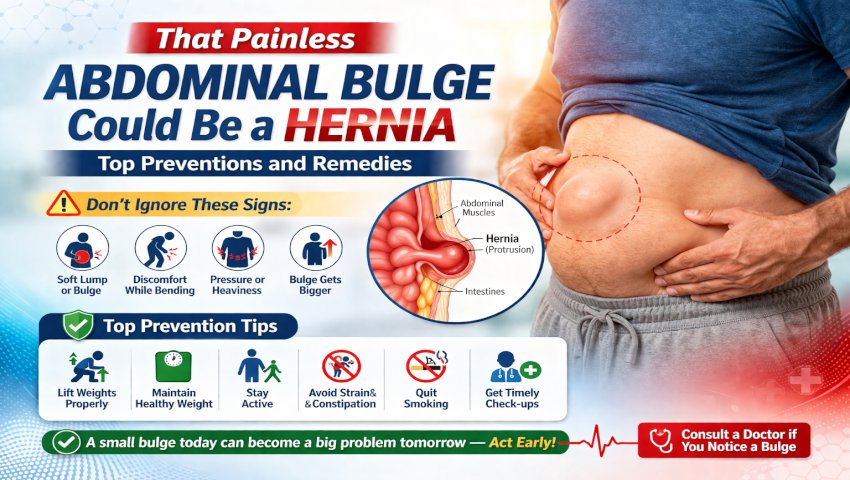
That Painless Abdominal Bulge Could Be a Hernia: Top Preventions and Remedies

  • Home
  • Blogs
  • That Painless Abdominal Bulge Could Be a Hernia: Top Preventions and Remedies
Painless abdominal bulge indicating early hernia symptoms explained by Dr. Pinak Dasgupta

Have you noticed a soft lump near your belly or groin? Does it appear when you cough or lift something heavy? Many people ignore it because it does not hurt. But that painless bulge could be a hernia — and leaving it untreated can be dangerous.

In this blog, we will explain what a hernia is, how to prevent it, and what treatment options are available. If you are looking for the best Hernia Specialist in India, this guide will help you make an informed decision.

What Is a Hernia?

A hernia occurs when an internal organ or tissue pushes through a weak spot in the surrounding muscle or connective tissue. The most common area is the abdomen, but hernias can also develop in the groin, upper thigh, and belly button.

Common types include:

  • Inguinal Hernia – in the groin area (most common in men)
  • Umbilical Hernia – around the belly button
  • Hiatal Hernia – in the upper stomach area
  • Incisional Hernia – at the site of a previous surgery scar
  • Femoral Hernia – just below the groin (common in women)
  • Recurrent Hernia – hernia that returns after a previous repair

Many hernias are painless in the early stages. That is why people often delay seeking help. However, untreated hernias can become strangulated — cutting off blood supply — which is a medical emergency.

Why a Painless Hernia Is Still Dangerous?

A painless hernia can give a false sense of safety. Over time, the bulge may grow larger. Physical strain can make it worse. In some cases, the hernia gets trapped and cannot be pushed back — a condition called incarceration.

If you notice a bulge in your abdomen or groin — even without pain — consult a qualified hernia specialist immediately. Early diagnosis and treatment lead to better outcomes and faster recovery.

Top Prevention Tips for Hernia:

While some hernias cannot be fully prevented — especially congenital ones — you can significantly reduce your risk with these steps:

  • Maintain a Healthy Weight: Excess weight puts constant pressure on your abdominal wall. Over time, this weakens the muscle and raises the risk of a hernia. Eating a balanced diet and exercising regularly helps keep your weight in check.
  • Lift Heavy Objects Correctly: Improper lifting is one of the biggest causes of inguinal and abdominal hernias. Always bend your knees — not your waist — when picking up heavy objects. Avoid holding your breath while lifting. Let your legs do the work.
  • Prevent Constipation and Straining: Chronic straining during bowel movements increases intra-abdominal pressure. Eat a fibre-rich diet, drink plenty of water, and stay physically active to keep your digestion healthy.
  • Quit Smoking: Smoking causes chronic coughing, which repeatedly strains the abdominal wall. It also reduces collagen production, weakening connective tissue. Quitting smoking is one of the best things you can do for your overall health and hernia prevention.
  • Strengthen Your Core Muscles: A strong core supports your abdominal organs and reduces stress on weak spots. Simple exercises like walking, swimming, and light yoga can help. Always consult your doctor before starting any exercise regime if you already have a hernia.

Hernia Treatment Options: From Conservative Care to Robotic Surgery

The only permanent cure for a hernia is surgery. Non-surgical methods — like using a truss or hernia belt — only provide temporary relief and do not fix the underlying problem.

Modern hernia repair options include:

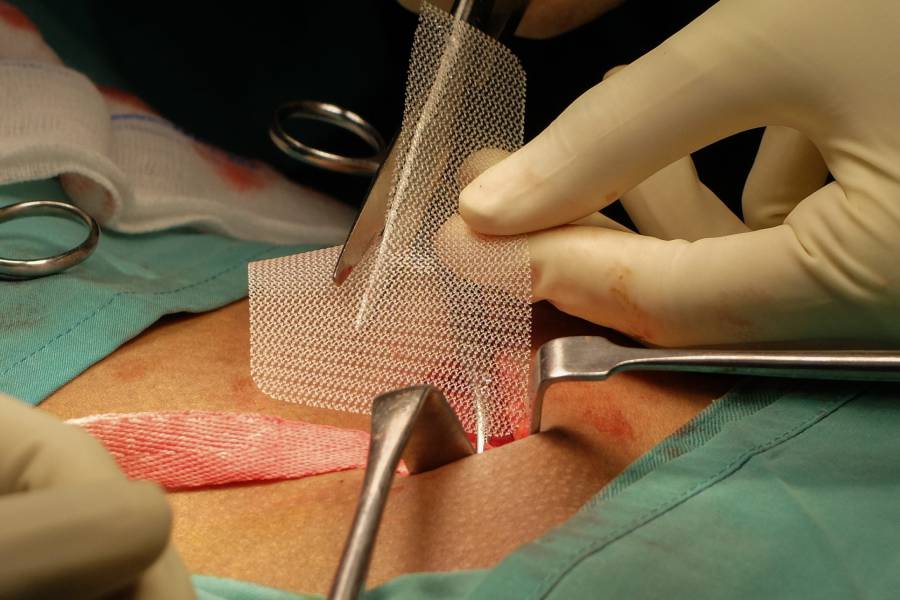
Open Hernia Repair
Open Hernia Repair

Traditional open surgery involves a larger incision and a longer recovery period. It is still suitable for some patients depending on the type and severity of the hernia.
Laparoscopic Hernia Surgery 1
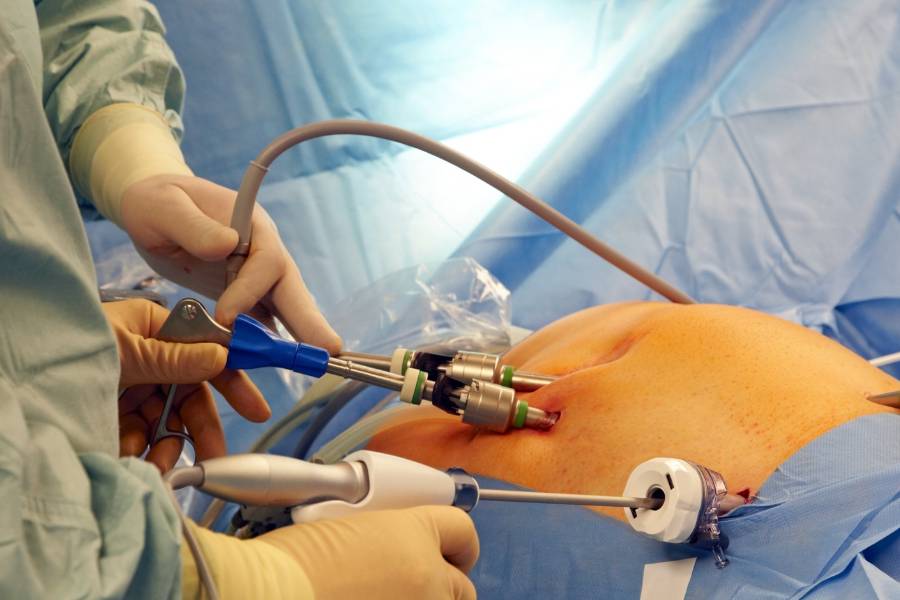
Laparoscopic (Keyhole) Hernia Surgery

Laparoscopic surgery uses small incisions and a camera. It offers faster recovery, less pain, and minimal scarring compared to open surgery. It is one of the most widely used methods for hernia repair in India.

Why Robotic Surgery
Robotic Hernia Surgery — The Most Advanced Option

Robotic hernia surgery is the most advanced technique available today. The surgeon uses a robotic console to perform the procedure with greater precision, flexibility, and control. It is especially beneficial for complex, large, or recurrent hernias.

Key benefits of robotic hernia surgery include:

  • Minimal blood loss
  • Smaller incisions and less visible scarring
  • Reduced post-operative pain
  • Shorter hospital stay
  • Faster return to daily activities
  • Lower risk of recurrence

If you are looking for Robotic Hernia Surgery in Chennai, India, Dr. Pinak Dasgupta at GEM Hospital is one of the most experienced and trusted names in the field.

Meet Dr. Pinak Dasgupta — Trusted Hernia Specialist in Chennai, India:

When it comes to hernia surgery, choosing the right surgeon makes all the difference. Dr. Pinak Dasgupta is one of South India’s most respected Robotic Hernia Surgeons in Chennai, India, with over 21 years of experience in advanced laparoscopic and robotic surgery.

Dr. Pinak Dasgupta has successfully performed more than 5,000 hernia surgeries, including 1,000+ robotic hernia procedures. He treats all hernia types — from simple inguinal and umbilical hernias to complex, recurrent, and abdominal wall reconstruction cases.

Highlights of Dr. Pinak Dasgupta’s expertise:

Dr. Pinak Dasgupta’s unique ambidextrous surgical skills allow him to operate with equal precision using both hands — a rare advantage in robotic and minimally invasive procedures. This results in better patient outcomes, faster recovery, and minimal scarring.

As a leading Hernia Specialist in India, Dr. Pinak Dasgupta is committed to personalised care. He believes that every patient deserves a treatment plan tailored to their condition, age, lifestyle, and health history.

When Should You See a Hernia Specialist?

Do not wait until the pain becomes unbearable. Consult a specialist if you notice:

  • A visible bulge or lump in the abdomen or groin
  • Discomfort while bending or coughing
  • A heavy or dragging sensation in the groin
  • Sudden, severe pain (emergency — seek help immediately)
  • Nausea or vomiting along with a hernia bulge
  • A lump that cannot be pushed back in

Early consultation with a qualified specialist ensures timely and effective Hernia Repair in India, reducing the risk of complications significantly.

Conclusion: Do Not Ignore That Bulge

A hernia may not always cause pain — but that does not mean it is harmless. The good news is that with today’s advanced surgical techniques, hernia treatment has become safer, faster, and more effective than ever before.

If you suspect a hernia, consult Dr. Pinak Dasgupta — the most trusted Robotic Hernia Surgeon in Chennai, India. With more than two decades of experience, cutting-edge robotic surgery capabilities, and a patient-first approach, Dr. Pinak Dasgupta offers world-class Hernia Repair in India at GEM Hospital, Chennai.